Sunday, July 26, 2009

Piedmontese!


Lifted this from the pages of TMP.

Amazing miniatures, 30mm, and sorely tempting...

Thursday, June 4, 2009

Time flies...

In the half a year since I updated this blog, this particular moth has been flitting around a number of different hobby porchlights for a while so "Will ye go to Flanders?" has been cruelly neglected of late.

My fascination with the War of the Austrian Succession has never been in danger of waning. However, there is ever only so much time available to spend on one facet of a hobby in which I have a number of different interests and projects on the go. Fortunately, a number of events are happening/ have happened which after such a long absence mean that it is high time for me to be doffing my tricorne again.

First off, and of great importance to me after having first read it all those years ago while a freshman at university, is the arrival of a new edition of Sir Reginald Savory's 1966 masterpiece, His Britannic Majesty's Army in Germany during the Seven Year's War.

This remains the only comprehensive modern book in English on the western campaigns of the Seven Year's War between the French and the Allied armies that I am aware of. After having walked over the battlefield of Bergen (1759) on my last trip to the Frankfurt area, I am anxious to read up on that and other battles of the time again.


It is being reprinted by Nigel Billington, through a very promising publishing venture, the 18th Century Press.

While Nigel and I are both very much into the War of the Austrian Succession ("WASsies" as he terms it!), the SYW is a mere stone's throw away in time, and I will be delighted to have it on my bookshelf at last. Congratulations, Nigel, and thank you for doing such a service for 18th C. aficionados.

Once Nigel notified me that things were ready to roll I had no hesitation in ordering a copy. At 75 pounds Sterling it is not cheap, but is still a good buy, seeing as good condition copies on the second hand market go for up to 4oo pounds or so- as do the reprinted versions by Athena Books.

And now perhaps at last I can finally get over the urge to kick myself for not having pilfered the University of British Columbia's copy when I had the chance; because some else must have done, as when I went back some years later to refer to it it had been long missing!

The other 18th C. goodness due to be shipped off my way is the latest edition of the Koenig Krieg rule set now published by Siege Works Studio in Australia. As I mentioned previously here, this was my first and still my favourite set of rules for gaming 18th C. battles, and while the bulk of the rules have remained "as is" it seems that there have been some revisions with unit sizes and rule presentation as well, with a much more "modern" layout in keeping with what gamers have come to expect lately (the original rules, as well as the second edition put out by Freikorps 15, look so "eighties" these days...).

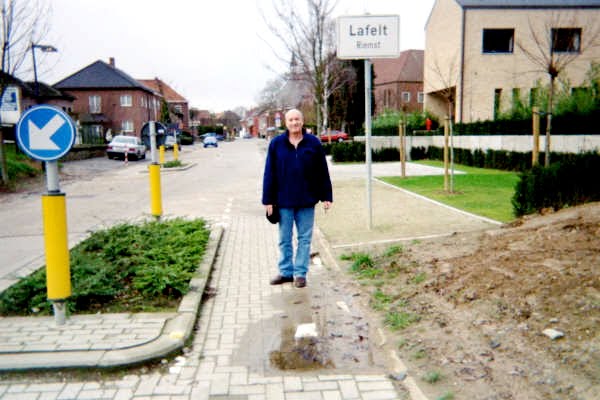
Finally, I received an email from a well-known designer of board games asking if I had any information on the Allied order of battle for Lauffelt in 1747. Well, that is proving a headache but more on that on a later post. And you won't have to wait six months for it this time.

Saturday, December 27, 2008

Gaming in the Grand Way...

Battle of Malplaquet; Another 9/11 on a vast scale, 300 years ago.

...is evidently alive and kicking in France.

Almost forty years before the War of the Austrian Succession, but these pictures give a great idea of wargaming on a large scale. Would that my games ever end up looking like this!

Malplaquet, 1709. An amazing array of flags on splendid terrain. Check the pictures in the gallery.

Friday, December 26, 2008

Good reading ahead!

Click image to enlarge,
(but buying a copy of the book will be more rewarding!
)

Good news for me on the War of the Austrian Succession front! At long-last I received my copy of Denis Gandilhon's Fontenoy- France Dominating Europe. And what a book it is! Well worth the wait.

Now, I cannot yet attest as to how accurate it is historically (I've only just received it today, after all), but as for first impressions- wow!

Part of the French Histoire & Collections "Men and Battles" series, this book is very much after the model of the familiar Osprey books. Although books like this tend to meet a lot of scepticism these days for a tendency toward inaccuracy or "fluff", they can still certainly inspire, and if you know little or nothing about the Battle of Fontenoy, you could do a lot worse than start here.

One thing I did notice immediately, though, was that the French infantry were shown in coloured waistcoats. While certainly the case in the Seven Years War, in the 1740's most (but not all) French regiments had plain waistcoats the same colour of the justeaucorps. This will not be the only book which has made that same mistake.

Regardless, this book certainly left me wanting to get hold of some more 18th C. miniatures! Eye-candy galore, with 82 pages of text including an order of battle. Each page is illustrated in full colour with maps and pictures. Some are familiar, but many are new to me, including some wonderful shots of re-enactors (Les Soldats du bien-Aimé; you can note the very pale grey- almost white- shade of the French justeau-corps!). Most exciting for me so far are the colour uniform plates, including Dutch infantry and cavalry, although I'd probably double-check my sources before using them as a painting guide.

*****

The other good news is that John Wright was kind enough to send me phots from his trip to the old battlefield of Lauffeldt in Belgium. Great to see them, and I'll be sorting through them and posting the best ones here in the next few days.

Thursday, December 25, 2008

Tweaking the Pragmatic Army (v.2)

click on picture to enlarge

Merry Christmas to everyone out there. Hope it is a good one for all.

The plan for world domination- or at least suzerainty over Flanders- continues for the Army of the Pragmatic Sanction.

As those who know me can attest, I am not a competition gamer and detest tournaments and "rule driven" army lists with matching points.

For one thing, I hate math.

Another thing is that the Gods did not treat everyone so even-handedly in real life out there on the battlefield. Few generals worth their salt would have accepted combat unless they felt reasonably sure that they enjoyed a numerical advantage, or at least some advantage in terrain or supplies. Those that didn't would have had battle forced upon them.

More often than not, the weaker side would retire behind a line of fortresses, where both sides might settle down to a siege and order a fine dinner of venison and claret (after having first arranged for the courtesans to attend them in their camps) until either first one side would pitch tents and return home as winter approached, or the other side would surrender the fortress after asking for- and receiving- the honours of war. Rinse and repeat for the next campaign season.

Still, there are some benefits is having a point system so that initial forces can at least be comparable with one another. After that, and once armies march of to war, things break down, mistakes are made, orders are misunderstood, ignored, or even lost, and roads become impassable. Bluebear Jeff mentioned one of my favourite tabletop devices for ensuring some unexpected "friction", namely dicing for appearance.

Just how many points I'm dealing with here for Koenig Krieg I need to work out, but Drew on the KK forum suggested that I'm looking at about 1500 points or so. At some point in the future I'll provide a detailed list of the units involved with their stats for use with KK.

*****

I've been tweaking the composition of the army list a little as more snippets of info arise.

First off, it turns out that there was a mixed Anglo-Austrian Brigade at The Battle of Dettingen, so it stays!

Secondly, I have reconsidered my artillery "doctrine". According to the Koenig Krieg lists, one army (heavy) gun may be allotted per brigade. So I've decided to do them after all- in large part after seeing some nicely painted batteries in an old issue of Miniature Wargames that was done by the League of Augsburg club. These were basically mini-dioramas of heavy guns in action in the Nine-Years War in the 1690's.

I realized that something along the same lines for the War of the Austrian Succession would be fun to do! So, I've added four guns to my target- one each of Austrians, Dutch, British and Hanoverians. The bases won't be quite as big as the one that Phil created, but they will allow me scope for modelling some little extra bits and pieces. Maybe 60-80mm wide by 100mm deep. Just so long as I use the same basing with M. de Saxe's merry men, it should be no problem.

Thirdly, my old bugaboo the Dutch horse. They are always proving themselves to be enigmatic, to say the least. "Seneffe" in his comment on my post on Dutch Cavalry mentions that Dutch Dragoons could be big regiments, with Schlippenbach's being up to seven(!) squadrons strong.

Things are made complicated by the fact that the army list for the United Provinces that were in the old edition of the Koenig Krieg rules that I have were clearly based on the reorganized post-WAS Dutch army, so are of no help to me at all. That leaves me with just a few pages on Dutch cavalry in the booklet by Stephen Manley with which to work things out, so Seneffe's help, and that of others, is warmly appreciated.

Anyway, I may therefore opt for 16-figure instead of 12-figure regiments, but only if I like painting them! I always feel that fielding understrength regiments is always justifiable anyway, as outpost duty, hangovers and glandular fever take their steady toll on numbers.

Finally, we turn to "The Quality"- army commanders. I have included three, not that they will all be in command at the same time. As with all alliances, there was plenty of friction between the different commanders, given touchy caste pride and as a result of frequent contradictory instructions-and pressure- from their respective governments. Not to mention just plain, simple good 'ol incompetence and bloody-mindedness due to gout. There seems to be plenty of opportunities for a "game within a game" to see if subordinates actually "do as they're dam' well told, damn their eyes, man!" As I'll likely be solo-gaming, this could make the games a lot more interesting.

And if that seems too harsh on the Pragmatic Alliance, just wait until you see my thoughts on the French army with its boudoir politics and petty jealousies! I'm sure I'll be able to level the playing field. I'm working on an order of battle for the French side now as well, which will appear later this week on my (long-too-inactive) "les Reves des Mars" site.

Wednesday, December 24, 2008

The Grand Plan

click on image for bigger picture

...for my Pragmatic army. This is a long-term goal of course, but it think it may be practical in Koenig Krieg terms. Two brigades of Dutch infantry, one Hanoverian, and a mixed Austrian/British brigade. It is somewhat tentative, as I do need to check the cavalry and artillery strengths.

Cavalry will consist of a brigade of Dutch Horse, one of Austrians (including a regiment of some brigand-like hussars), and one of Hanoverian horse. Cavalry will make up about a third of the army, which may be a little high. I may reduce it by cutting out one of the Austrian dragoon regiments, especially I find myself getting tired of painting horseflesh!

Army artillery is generic at this stage. British? I haven't really found out much about the artillery of the Pragmatic Army yet. Every infantry brigade will have a light gun in addition to the heavy battery. I suspect heavy artillery was not all that mobile in 1747, if at all.

The army represented here is taken from a hodgepodge of orders of battle from the WAS, including Dettingen and Fontenoy. It is a good representative force rather than being a snapshot of any particular battle, and I'm happy with that.

I've no idea right now how this works out in terms of point values for KK, but in honesty that is not really a concern to me. I've always gone the historical order-of-battle route. The French opposition will be of similar, if not identical, strength which is all that matters.

And the graphics for the orbat were fun to do. I've become quite proficient at PowerPoint and iPhoto these days.

Right, now back to cleaning the flash of those figures! I've a busy evening glueing tails up equine derrières ahead of me...

Kapitain's Log, supplemental-

"musket99" one of the brains behind the new Koenig Krieg project from Siege Works Studios, was kind enough to give me some feedback on the list. He raised the point that there is likely too much artillery for a force this size, so out with the heavies! That saves time and money my end, so no complaints there.

His other issue is whether there was in fact a mixed Anglo-Allied brigade. I got this information from my source giving an order of battle for Dettingen, and I did have to wonder myself whether such a joint command would have been feasible given any doctrinal differences between the two armies- not to mention the language barrier! The source I have mentions the following single-batallion units as being brigaded under Count Salm at the Battle of Dettingen in 1743.
  • 37th Regt. of Foot (Ponsonby's)
  • 23rd Regt. of Foot (Peer's)
  • No. 60- Arenberg (Austrian)
  • No. 62- Heister (Austrian)
Does anyone out there have an alternative organization for these regiments? If so, I'd love to know! It may be that I might have to split the brigade in two, and add another couple of batallions or so to each depending on what comes to light.

Thanks to musket99 for pointing this out to me! Once I get some firm infomation on this, I'll update the chart again.


Tuesday, December 23, 2008

Getting down to brass tacks...

Christmas is coming, the prezzies are wrapped and under the tree, and the sushi has been ordered for Christmas dinner.

My birthday falls on Christmas Eve, so this year my wife bought me a set of bookshelves for my hobby room. Bless her, as this is quite a big step forward for me. It means that I have been able to clear the painting table of assorted flotsam and jetsam, and now actually have room for painting again!


"Happy birthday to me, La LA la DEE dee..."

With all that out of the way, it leaves me just under four weeks of vacation time left for painting, and if I am to accomplish anything at all, I need a firm plan. So here it is!

I first intend to finish up some odds-and-ends; units of French and Russian Napoleonics that have been hanging around in a state of almost-there-but-not-quite for longer than I care to admit, and a re-basing of some ACW minis I've had stashed away in boxes for some years now.

But my main project will be to begin work on my Eureka WAS Dutch army. Here is the first instalment, four 12-figure units of infantry with a regiment of dragoons and a battalion gun, as well as a brigadier and His Excellency, The Prince of Waldeck-Pyrmont (lurking at rear on the hexagonal base; no doubt riding around in a state of chronic indecision, like a chicken with its head cut off).

All are based for Koenig Krieg (the new version of which should be coming out early in the new year).


Step 1 will be to to clean the flash from the buggers (I hate- really hate- that part of the hobby), and then get them all primed and mounted on plastic bottle caps for painting.


My goal is to get at least two of the infantry battalions- Broenkhoorst's and Broekhuysen's regiments- painted by the third week of January, along with the attached battalion gun, and to have made at least 50% progress on the others including the cavalry.

Here are the cavalry.


I really like these fellows. They have a lot of character, including some minor head variations. Modelled at ease- clearly just waiting for the order to slash through French ranks- they have that requisite 18th C. "stateliness", and the officer in particular is a real haughty looking chap.

There are a few odd spots; the horses are maybe a tad small, but not significantly so, and the minis match up pretty well with the Front Rank cavalry I have for the French. Most noticeable to me was a large lump that passes for the butt of the carbine. This could be filed down, but for the sake of time I am not going to bother as it does not really detract from the look of the unit. Unusually, the tails of the horses are separate and have to be glued on. This it makes for cleaner casting of the horses and less time with the file. On the whole, I am extremely satisfied with these guys and look forward to painting them.

Most likely they will be the Hessen-Homburg dragoons.

So it is out with the files and hobby knives, put on a CD, and just get down to work. Wish me luck!